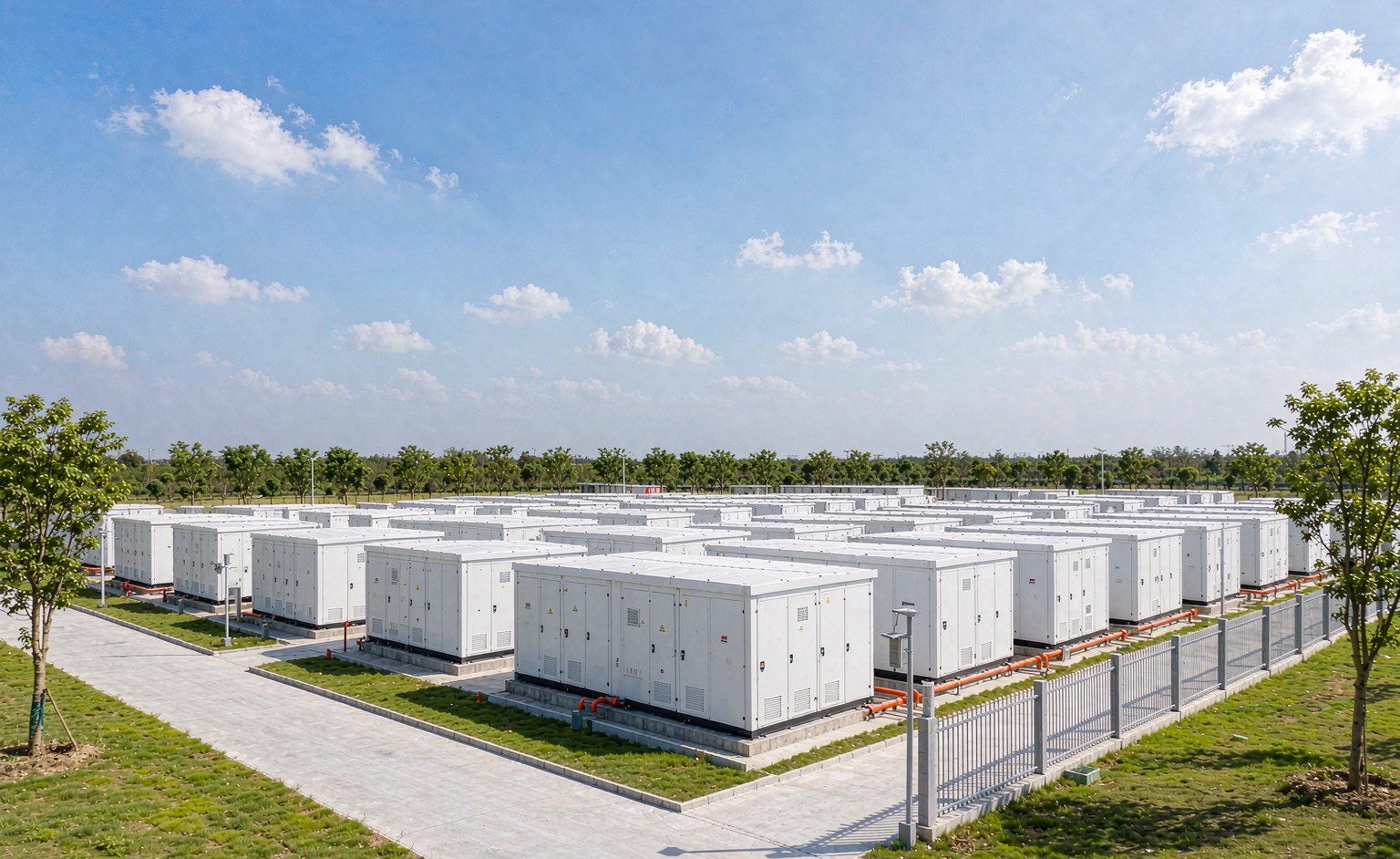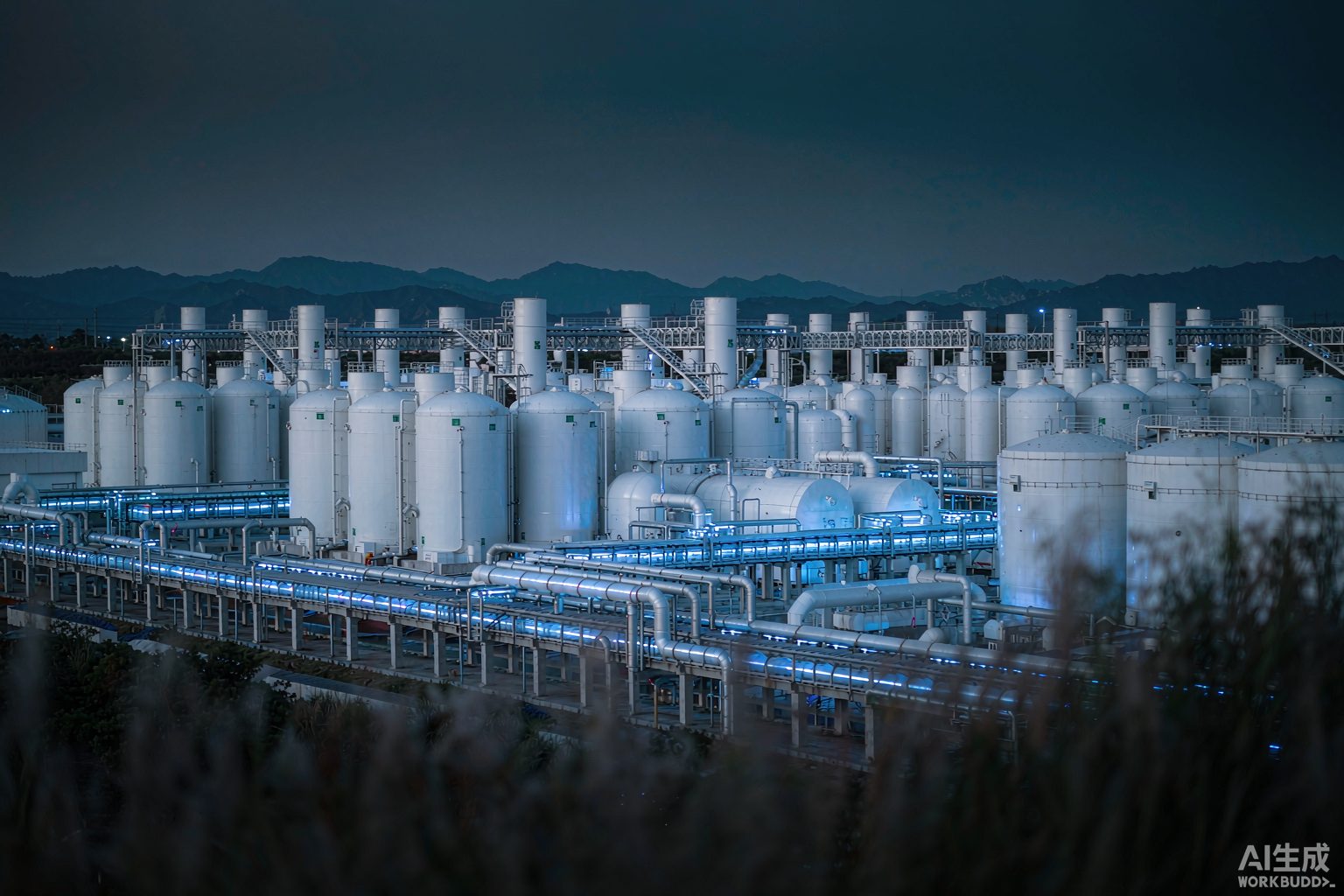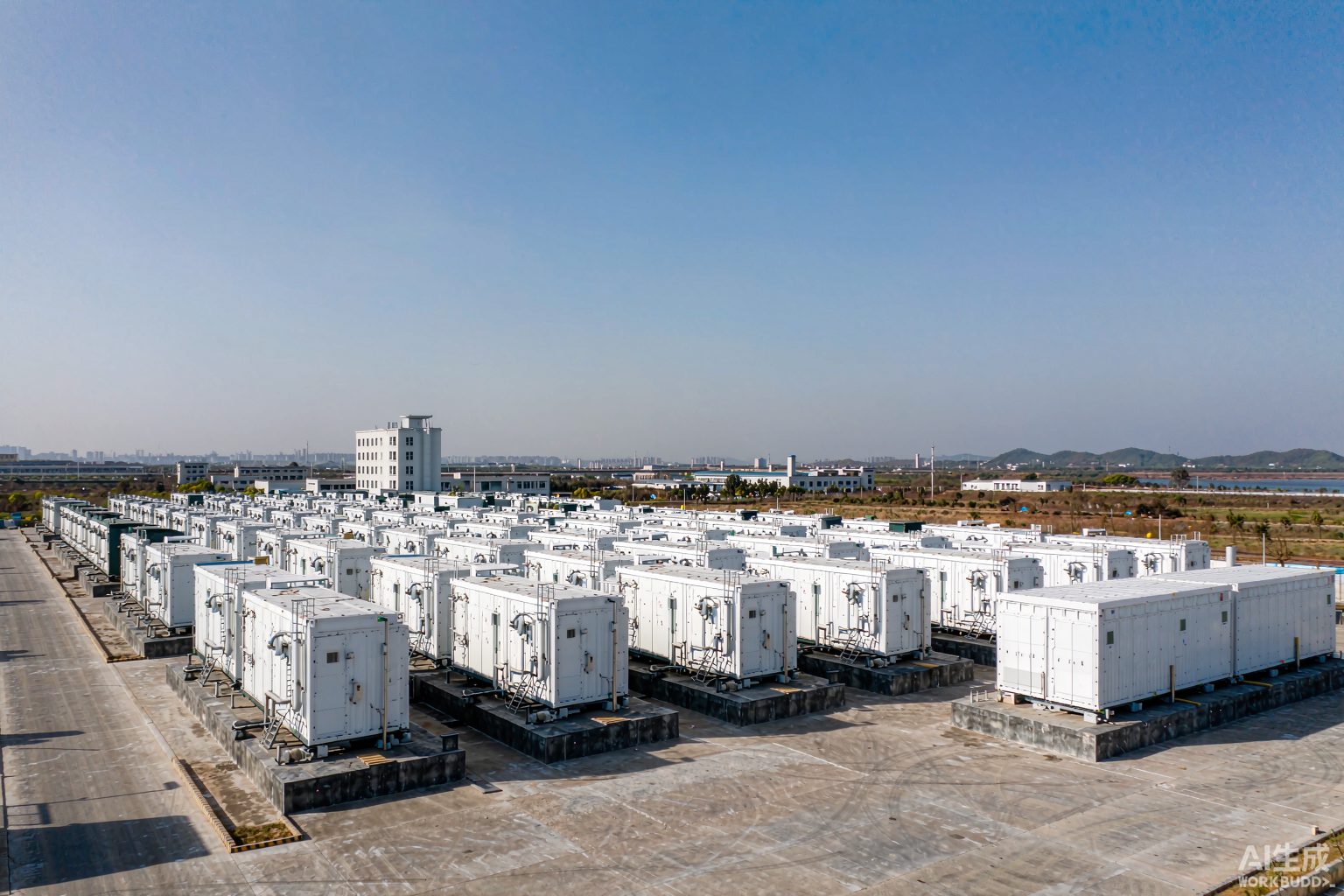
In recent days, four departments, namely, the Department of Industry and Information Technology of Jiangsu Province, have issued an action plan for the development of quality in the new storage and energy industry in Jiangsu Province. It is proposed that by 2030, new types of energy storage technologies, new products, new models have emerged, advanced electrodes, new electrolytes, high-end auxiliary materials, and key technologies have been broken down. The supply capacity of high-security, reliable, energy-efficient and economically viable high-end products has significantly increased. A typical set of applications has been created in the areas of electricity, industry, computing, transport and communications, with new energy storage industries throughout the province taking the lead nationwide, with a cumulative capacity of over 10 million kilowatts.
To support enterprises in developing light quantitative and specialized models and building high-quality industry data sets for new types of storage capabilities, such as design, production optimization, quality testing, transport control. Enterprises are encouraged to use technologies such as smart inspections, machine vision and digital twinning to advance the digitization of key processes and upgrade the level of intelligent manufacturing. (b) The development of “Assisting + Manufacturing” diagnostics using a combination of on-line and off-line methods to advance the construction of advanced, superior and pilot-class smart plants. Supporting enterprises to move beyond key technologies such as battery health assessment, smart warning and failure diagnosis, energy cluster smart deployment, distributed energy aggregation and regulation to upgrade the full life cycle digital control and transport of new energy systems. By 2030, more than one large industry model will have been developed, with no fewer than 15 typical cases of artificial intelligence plus.
Circular on the publication of the action plan for the development of quality in the new storage and energy industry in Jiangsu province
Sioux Shinshin. 310.
Department of Transport and Communications, Department of Commerce, Department of Data, Department of Intellectual Property Rights, Communications Administration, Municipal Industrial and Informatization Directorate, Development Reform Commission, Department of Science and Technology, Market Monitoring Authority:
In order to accelerate the development of quality new energy storage industries and to support the construction of new energy systems, the Plan of Action for the Development of Quality in the New Energy Industry in Jiangsu Province has been issued to you.
Jiangsu Province Industrial and Information Agency
Jiangsu Provincial Development and Reform Commission
Jiangsu Department of Science and Technology
Jiangsu Province Market Supervision Authority
5 November 2026
Jiangsu Province Action Plan for the Development of Quality in the New Resilient Energy Industry
In order to follow up on the strategic deployment of the Party Centre and the State Council on the development of the newly emerging pillars of industry, the eight departments, namely the Ministry of Industry and Communications, are carefully implementing the Programme of Action for the Development of Quality in the New Storage and Energy Manufacturing Sector (2025) This plan of action is being developed in response to the demands of the provincial councils and provincial governments to promote the high quality development of new energy storage industries and to provide strong support to accelerate the construction of new energy systems in the provinces.
I. GENERAL REQUESTS
Guided by Xi’s new Chinese socialist philosophy of the Chinese era, the main thrust is to consolidate the competitive edge of the new whole-industry chain of savings and energy, driven by key technological innovations, driven by artificial intelligence capabilities, insisting on a combination of efficient supply and expanded demand, accelerating the construction of new systems of energy-based industries that are applied to pull, diversify and move forward, secure and efficient, and ecologically synergistic, and creating high ground for industrial innovation. By 2030, new types of energy storage technologies, new products, new models have emerged, advanced electrodes, new electrolytes and high-end support materials have broken through a number of key technologies. The supply capacity of high-security, reliable, energy-efficient and economically viable high-end products has increased significantly. A typical application landscape has been created in the areas of electricity, industry, computing, transport and communications, with new energy storage industries throughout the province taking the lead nationwide, with a cumulative capacity of over 10 million kilowatts.
II. Promoting new and innovative energy storage technologies
(i) Accelerating critical core technical clearances. (b) To streamline new technologies for the length of the storage and energy chain, organize projects such as the provincial science and technology programme, the industrial chain collaboration, etc., and support national projects such as the national priority R & D programme in enterprises and institutions of higher education. Accelerate the development of new battery materials, such as high-energy electrode materials, high-stabilized electrolyte materials, high-power resistant diaphragm materials, breaking through cores such as advanced power semiconductors, intelligent sensors, and special energy chips, and developing special equipment such as high-speed smart coating machines, pressurizers, stackers, chemical-component cabinets, etc. By 2030, no fewer than 10 critical technical clearance missions will have been organized. (Department of Science and Technology, Department of Industry and Information)
| Box 1 Critical core technical coverage |
| Electro-polar material. Development of high-capacity, long-cycle, self-rehabilitated electrode materials, with emphasis on the development of orthodox materials such as phosphoric lithium, high nickel, low cobalt, lithium manganese-rich, polyion, layered oxide, and Prussia Blue (white), through negative polar materials such as high-energy silicon, carbon-based, silicon carbon compound, metal lithium, and forward research on non-negative polar technologies. Electrolyte material. Development of new lithium salt electrolytes, sodium ion batteries electrolytics, liquid current electrolytes, etc., and development of solid electrolytes such as high stability sulphides, high electrical conductivity oxides, high resilience polymers, etc. diaphragm material. Emphasis is placed on the development of high-security diaphragms, ultra-film composite diaphragms and new diaphragms such as ceramic diaphragms, new polymer diaphragms and non-swipeded diaphragms. Key supplements. Development of high-value-added supplements such as high-efficiency lithium supplements, sodium supplements, carbon nanopipe conductors, high-performance glues, composite concentrates, insulation flame retardants, etc. Metaware. The focus is on breaking power instruments such as IGBT (insulation grid bipolar transistor) and SiC MOSFET (carbline metallic oxide semiconductor effect transistor), which enhance performances such as high-precision smart sensors, high-pressure straight-flow contacts, direct flow breakers, etc., and support development applications such as simulation of front-end chips, MCU master control chips, power drive chips, etc。 |
(ii) Promoting multi-technology routing. Supporting the development of new energy-capacitator technologies and the construction of supply systems based on lithium batteries, with co-mplementarities among various energy-capable products. Emphasis is placed on supporting the iterative upgrading of lithium ion cell energy products to improve storage life, recharge efficiency, response speed, etc. Advance the development of sodium ion batteries to promote wide-temperature, long-lived, low-cost product scale applications. Accelerate the commercialization of long-term energy storage products such as liquid-flow batteries, compressed air storage capacity, and gravity storage capacity. Active deployment of front-line technologies such as solid-state batteries, fly-wheel energy, hydrogen energy, etc., to advance industrialization and demonstration applications. To recommend the declaration of innovative products as the country's first (set) equipment in the field of energy and to support the declaration of new products for new technologies as “three new and two new”. By 2030, no fewer than 80 new products will have been promoted for the application of new technologies in the field of energy storage. (Department of Industry and Information, Provincial Development Reform Commission, Provincial Science and Technology Department, according to division of duties)
| Box 2 High-end energy supply project |
| Lithium ion batteries. Optimizing design and manufacturing processes to improve battery safety and economy throughout the life cycle from material, monomer, system, etc. Promote the scale-up of 500 Ah and more large-capacity batteries to promote iterative upgrading of ultra-high-capacity batteries, climate-wide low-depletion batteries, high-multiplier batteries, etc. Sodium ion batteries. Strengthening of sodium and interface response mechanisms, ion transmission mechanisms, studies to optimize the structure of electrode materials, addressing technical difficulties such as low-efficiency, high-speed discharges, breakthroughs in critical technologies for large-scale industrialization, continuous reduction of production costs, expansion of commercial and industrial storage, grid storage, etc. Liquid flow batteries. Focused ion exchange membrane, corrosive diode plate, high concentration electrolyte, among others, with a focus on green recycleable whole liquid batteries, chromium iron flow batteries and zinc bromine flow batteries. Compress air storage capacity. The development of wide load compressors of 100 MW class and above, high load peroxides, efficient heat exchangers, efficient heat storage units and low-cost gas storage facilities, among other things, to improve system round-trip efficiency, change management and rapid response capabilities. Lead acid batteries. To exploit the advantages of low-cost, well-safe and mature recovery systems, optimize plate-breath alloy and lead ointment processes, develop new types of structures such as lead carbon batteries and bipolar batteries, and promote the scaleing of applications such as telecommunications base stations, data centres, etc. Solid batteries and other products. Focus on breaking key technologies such as solid-solid interface regulation, thermostatic pressure, dry electrodes, promoting test and volume production in semi-solid batteries and fully solid batteries. (c) Upgrading of the core components of the Flying Wheel Energy Reserve, such as high-intensity rotors, magnetic suspended bearings, and forward layout of new reserve products such as hydrogen, gravity, super capacitors, heat reserves. |
(iii) Enhancing the integration of energy systems. Promotion of modularization and standardized design of energy systems to support integrated technological innovations such as intelligent clusters, high-pressure verticals, prefabricated module integration and to enhance the efficiency of the integration of large energy systems. The development of high-precision, self-diagnostic, self-executed battery management systems (BMSs), the development of high-efficiency heat management systems (TMSs) such as wind cooling, immersion, liquid cooling, thermal tubes, transformational complexes, innovative cloud-side synergetic synergetic, intelligent multi-level decision energy management systems (EMS) to improve battery state accuracy, heat outage warning and active protection levels. Targeting smart microwires and new energy demand to break through key technologies such as inertial support, co-control, and promote the development and application of large-power and multi-stage network-based transformers (PCS). By 2030, foster a new and mature set of energy system solutions. (Separation of responsibilities by the provincial departments of industry and information, science and technology, and development reform committees)
(iv) Strengthening innovative service platforms. Support to lead firms in integrating innovation resources up and down the industrial chain to foster manufacturing innovation centres around priority areas such as electrochemical, physical and digital energy. Support to priority enterprises, higher education institutions and industrial parks to build a series of medium-test platforms and open shared technical complication, process amplification, sample testing, etc., around priority directions such as advanced energy storage materials, solid energy storage cells, new sodium ion batteries, compressed air storage, high power flyer energy. To support the construction of a certification platform for the testing of new types of energy, providing technical support for the high-quality development of new types of energy industries. By 2030, no fewer than 60 innovative vehicles, such as provincial priority laboratories, enterprise technology centres, industrial engineering centres, quality control centres and industrial metrology testing centres, have been built. (Office of the Provincial Directorate of Industry and Information Technology, Provincial Directorate of Science and Technology, Provincial Directorate of Markets and Provincial Development Reform Commissions, in line with the division of responsibilities)
III. Facilitating the expansion of demonstration applications
(v) Advance power side storage applications. Focusing on the development of “new energy + new energy reserves”, building on centralized photovoltaics, offshore wind power bases, etc., supports the construction of systems-friendly new energy power plants, smoothing the new energy curve, supporting power supply security and efficient new energy cuts, using new types of storage, smart regulation, etc. Accelerate the expansion of “fired + storage” to encourage coal-fired power plants to deploy electric chemical energy, melted salt heat, blended storage, etc., to create a number of high-frequency FM demonstration projects and to encourage the use of decommissioned fire power sites to plan new types of storage. Explore the development of “nuclear + storage capacity” to enhance the flexibility of nuclear power systems. (Regulated by relevant departments such as the Provincial Development and Reform Commission)
(vi) Expansion of grid-side storage applications. Scientificly planned grid-side storage capacity supports the construction of independent new energy storage plants at key grid nodes, such as large-scale new energy pools, high-pressure direct flow points, and power load centres, to upgrade the power system ' s top supply and FM capacity. Accelerated network-based energy storage technology validation applications and active promotion of network-based energy demonstration projects in areas such as the high share of new energy sources and the end of the distribution grid. Innovative models such as shared energy, cloud energy and other applications are encouraged, independent storage capacity-sharing platforms are built, and the utilization and economy of energy resources are improved. (Regulated by relevant departments such as the Provincial Development and Reform Commission)
(vii) Development of multi-species innovative applications. Promotion of end-users, such as industrial parks, large businesses, data centres, communications bases, transport, etc., to fully tap new energy applications and build distributed energy facilities in a flexible economy. The development of new and emerging applications and artificial intelligence+ applications encourages market owners in a position to do so to undertake pilot demonstration of new products from new storage technologies and to support accelerated landings of new models such as computing synergetics, refilling integration and network interaction (V2G). (c) To address the construction needs of zero-carbon parks, zero-carbon plants, etc., by supporting qualified industrial parks, enterprises and industrial green micro-grids, and by actively developing new business practices, such as green power chains, virtual power plants and the integration of supply-net storage. A selection of typical applications and practice cases is regularly selected to develop replicable and replicable business models. By 2030, no fewer than 50 typical cases will have been collected to promote new types of storage energy applications. (Pedagogical Development Reform Commission, Provincial Industry and Information Department, Provincial Data Bureau, Provincial Communications Authority, Provincial Transport Department, according to division of duties)
| Box 3 Innovation application scenario extension |
| Industrial scene. For high-energy industries such as metallurgical and chemical industries, deep convergence between storage and industrial production processes is promoted, process-side peaking, after-heat energy integration applications are implemented, and energy conservation in support industries is reduced. Source-net storage integration. Using vehicles such as industrial parks and new urban zones, virtual power plants are used to aggregate and deploy, to promote efficient co-ordinated supply network storage, to build multi-energy complementary integrated energy systems, to build smart green micro-grids, zero carbon zone poles and to achieve near-discount green power. Calculator synergy. Promote the deployment of network-based storage capacity in data centres and centres of wisdom, promote integrated deployment models of “calculative + reserve energy” where appropriate, and use new types of storage capacity to contain fluctuations in capacity, and participate in grid peaking and demand response. Net interaction. (c) The use of electric vehicles as “mobile storage” around residential communities, public site stations and urban logistics, the promotion of two-way discharge demonstration applications and the orderly promotion of the construction of integrated “photo-filling” charging stations. Support the pilot development of the Changzhou National Network interactive scale application. |
IV. Accelerating the greening of smartness
(viii) Deepening artificial intelligence capabilities. To support enterprises in developing light quantitative and specialized models and building high-quality industry data sets for new types of storage capabilities, such as design, production optimization, quality testing, transport control. Enterprises are encouraged to use technologies such as smart inspections, machine vision and digital twinning to advance the digitization of key processes and upgrade the level of intelligent manufacturing. (b) The development of “Assisting + Manufacturing” diagnostics using a combination of on-line and off-line methods to advance the construction of advanced, superior and pilot-class smart plants. Supporting enterprises to move beyond key technologies such as battery health assessment, smart warning and failure diagnosis, energy cluster smart deployment, distributed energy aggregation and regulation to upgrade the full life cycle digital control and transport of new energy systems. By 2030, more than one large industry model will have been developed, with no fewer than 15 typical cases of artificial intelligence plus. (Provincial Office of Industry and Information Technology, Provincial Development and Reform Commission, with division of responsibilities)
(ix) Promoting low-carbon green development. Support new energy storage enterprises to build green manufacturing systems covering design, products, factories, parks and supply chains, increase the proportion of clean energy use, such as green electricity, encourage carbon footprint accounting and create green factories, (near) zero carbon plants and parks. :: Encourage front-line enterprises and industry associations to strengthen innovative, life-cycle traceability management for all types of storage, from manufacturing, application to integrated use of traceable. (c) Research on the re-manufacturing of core components such as non-destructive battery packs, restoration of positive and negative polar materials, environmentally sound treatment of electrolyte, advancement of compressed air storage through flat blades, fly-wheel energy storage bearings, and layout of a regional battery recycling complex. (Provincial Office of Industry and Information Technology, Provincial Development and Reform Commission, with division of responsibilities)
Building industrial synergies for ecological development
(x) Elevator teams to foster high-quality enterprises. Create a new reservoir of high-quality enterprises to support the consolidation of systems, the consolidation of operating services, the consolidation of resources and the internationalization of the landscape, accelerate growth into globally competitive eco-led enterprises, create several world-class reserve-power brands and lead industrial ecological clusters. Focusing on critical links such as advanced energy storage materials, converters, battery management systems and safety protection, a stratification selection of deep-tilled small and medium-sized enterprises with market breakdowns, innovative capabilities, and a group of manufacturing champions, specialized new “small giants” and “unicorns” “gollards” enterprises. By 2030, a total of 90 specialized new “Small Giants” enterprises will have developed. (Department of Industry and Information Technology, Department of Science and Technology, by function)
(xi) Developing niche industry clusters. Support the development of new types of storage and energy industries that are tailored to local conditions, based on the industrial base and distinctive advantages. Support for the enhancement of technology clearance, platform building and results transformation capabilities in Nanjing and Suzhou, and the creation of new sources of innovation in energy storage industries. Support for the establishment of new high-end storage power manufacturing bases in Changzhou, Tin-free and Nantung as strong energy cores and core devices and systems integration. Support has been given to priority areas such as the development of smart electricity grids in Yangzhou, Jinjiang and Taizhou, as well as to the creation of new storage and equipment support industrial bases. Support for salt cities, Liangyun Harbor, the use of light, nuclear power, salthouse resource enrichment and the creation of new storage power scale application bases. (Provincial Office of Industry and Information Technology, Provincial Development and Reform Commission, with division of responsibilities)
(xii) Strengthening intellectual property rights and standard-building. Patent navigation around core technologies such as key materials, energy storage batteries and electrical and electronic devices, increased promotion of high-value patenting, exploration of new market-oriented reservoirs of patents, enhancement of overseas intellectual property layouts such as PCT, enhanced professional services such as rapid patent pre-trial, risk warning overseas and dispute management guidance. A new workshop on standardization of the storage and energy industries was organized to clarify the architecture and weaknesses of the industrial chain standards system and to form the “third list of maps” of industry standards and the revised list of key standards, the list of important standards promotion and implementation, and the list of standardized needs of enterprises. Support business leadership or participation in international, national, industry standard-setting revisions to enhance standard layout in areas such as sodium batteries, solid batteries, liquid-flow batteries, safety management, network control. (Provincial Markets Regulatory Authority, Provincial Intellectual Property Authority, Provincial Industry and Information Services Division of responsibilities)
(xiii) Expanding international cooperation and exchange. Deepening cooperation with countries that have built a “one-way street”, actively expanding emerging markets such as the Middle East, South-East Asia and Africa, supporting leading firms to drive up and down the industrial chain, participating in the construction of large-scale offshore storage and energy projects through outsourcing and investment operations, and developing an integrated export model of “technology + equipment + service + standards”. In response to market demands in Europe, North America, Australia and others, enterprises are encouraged to upgrade the suitability and economy of products such as household and portable storage, and to expand incremental markets such as overseas data centres. High-end forums, contests, etc., are encouraged, as are industry associations, to set up collaborative exchange platforms with international influence to accelerate technical interface and mutual recognition of international standards. (Department of Commerce, Department of Industry and Information, Provincial Development Reform Commission, Provincial Markets Regulatory Authority, according to division of responsibilities)
VI. Safeguards
Establish a mechanism for cross-sectoral synergy, strengthen research on critical issues and ensure that priority tasks are effective. The municipalities are encouraged to combine the regional industrial base, identify quasi-development, define objectives and strengthen regional cooperation. Support for enterprises and projects in new and eligible areas of energy management by pooling all types of provincial financial resources, encouraging investment funds and social capital to be invested in new types of energy-generating industries, supporting insurance institutions in the development of new types of exclusive insurance products, establishing data-sharing mechanisms for the safe operation of such reserves, and supporting insurance institutions in risk reduction services. Strengthening of early warning for monitoring of energy production, such as lithium batteries, implementation of national capacity management deployments, improvement of product quality management, role of industry organization, promotion agencies, etc., and strengthening of industry self-regulation and regulatory development. To speed up the establishment of price mechanisms such as the price of independent storage capacity on the side of the electricity grid in our province, and to promote the full participation of new types of storage capacity in electricity market transactions, as well as orderly participation in medium- and long-term electricity markets, spot markets and ancillary services markets.
Former title: Provincial Office of Industry and Information Technology, Provincial Development and Reform Commission, Provincial Department of Science and Technology, Provincial Directorate of Market Supervision, circular on the publication of the Plan of Action for the Development of Quality in the New Reserved Industries in Jiangsu Province